How to Tell When Your Pool Table Needs New Felt
Cloth wears out slowly enough that most owners stop noticing, so here is how to spot it and what happens when the table gets recovered.
October 17, 2026 · 4 min read
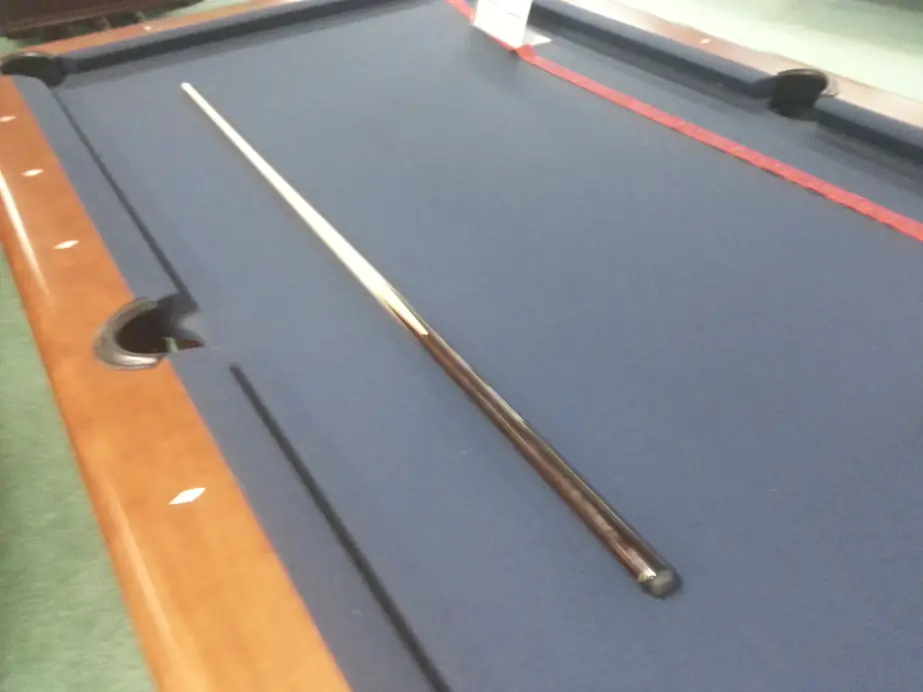
Pool table cloth does not fail all at once. It wears down a little every time someone breaks, draws the cue ball back or leans over the rail to reach a shot, and the change is slow enough that most owners stop noticing it. A game that used to feel crisp starts to feel slightly off, and the first guess is usually the player, not the table. Before you blame your stroke, take a close look at the cloth.
What worn cloth looks like
Stand at one end of the table with a lamp turned on behind you, then look along the surface at a low angle. Wear shows up far better from the side than from straight above. These are the signs worth checking.
- Shiny, slick patches along the center of the table and in front of the pockets, where the nap has been rubbed flat.
- Balls that roll slower than they used to, or drift off the line you aimed at, especially on long shots.
- Pilling, fuzz or loose fibers collecting on the cloth and sticking to the balls.
- A nick, burn or tear, or a stain that has soaked in and will not brush out.
- Cloth that has pulled away from the rails or shows a ripple along an edge.
- Faded color, especially on the side of the table that faces a bright window.
What wears the cloth out
Cue chalk is the biggest everyday cause. Fine chalk dust drifts onto the cloth and works down between the fibers, and over time it acts a little like sandpaper, wearing the nap down from the inside. Balls that never get wiped carry that same grit back across the cloth every time they roll. Keeping the balls and rails clean slows all of this down, but it never stops it completely.
Spills are the other big one. A drink that soaks into the cloth can leave a stain, stiffen the fibers and seep down toward the slate underneath. Sunlight is quieter but just as real. A table that sits across from a window will fade on the side facing the glass, and you may see a clear line where a piece of furniture once shaded it. The shop offers a choice of spill guard when it recovers a table, so mention how the room really gets used.
How often should a table be recovered?
There is no honest answer in calendar terms. A table in a family room that sees games every evening wears faster than one in a formal room that comes out for the holidays. The quality of the cloth matters, how clean the room stays matters, and so does how the table gets treated. Instead of counting, go by what you see and feel. If you are noticing several of the signs above, or one of them is severe, like a tear or a deep stain, it is time to call.
What a recovery actually involves
A recovery is more than pulling off the old cloth and stretching a new piece. At Steve's shop it covers replacement of all the felt, an examination of the table with every fitting tightened, and a re-level once the new cloth is on. That last step matters more than people expect. The cloth is the first thing you see, but a table with a loose fitting or a slight tilt will play badly under brand new felt.
You also get a say in the cloth itself. The shop works from a long list of felt colors, and it uses a high quality felt with a choice of spill guard. If you are unsure which way to go on color, the felt colors page walks through the whole range.
What about the bumpers?
Under the cloth on each rail sits a rubber cushion, often called a bumper. When that rubber hardens, balls come off the rail dead or at an odd angle, and no amount of new felt fixes it. You usually cannot judge it by looking, but you can feel it in how the table plays. At the shop, a recovery with bumper replacement is quoted separately from a basic recovery, so you can compare both options before you decide.
A move is another natural time to think about fresh cloth. The rails and the felt come off when a slate table is taken apart, so if you are relocating the table anyway, ask whether new felt makes sense while it is in pieces.
When you are ready for a number, the recovery quote page lets you choose your table size and say whether you want bumpers included. Steve quotes every job, because tables and rooms differ, so there is no price list to read. Send the request, or call the shop at (845) 597-5532 and ask for Steve.
Steve's Pool Tables Plus, (845) 597-5532
Call (845) 597-5532More articles
How Much Room Does a Pool Table Need?
The table is the easy measurement; the space around it, set by your cue length, is what decides whether it fits.
Why a Slate Pool Table Has to Come Apart to Move
A slate table is a stack of carefully fitted parts, and moving it means taking it down and building it back up in the new room.