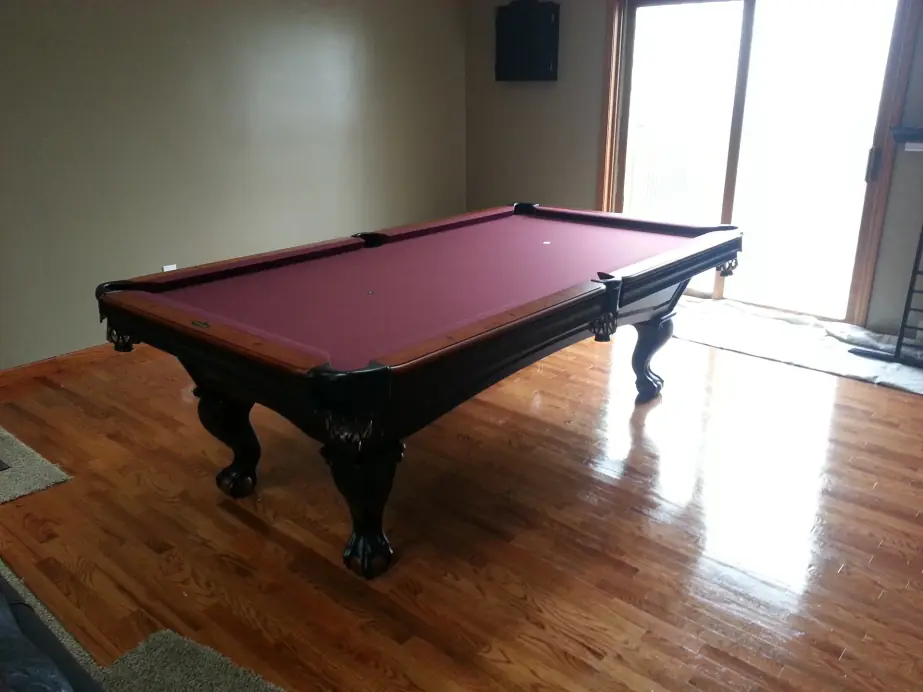
A table in boxes is not a pool table yet
A new pool table reaches the house as a frame, a stack of slate and a roll of cloth. Nothing in the crates tells you whether it will play true, because the playing surface does not exist until someone builds it in your room. A poor set up shows itself later: a ball that drifts toward one rail, a seam you can feel with a fingertip, a table that was fine in March and rocks by July.
Those faults nearly always start at assembly, not at the factory. Slate is rigid, heavy and unforgiving, and it will not make up for a frame that is out of square or a floor nobody checked. That is why the install matters as much as the table you pick, and why a Brunswick bought from a showroom in Newburgh is only as good as the hands that set it down.
Before any of that, measure the room. An 8-foot table with 48-inch cues wants 12 feet by 15 feet 6 inches of clear floor, and longer cues push that to 13 feet 6 inches by 17 feet. The room size chart has every table size, so a short wall never turns into a surprise on delivery day.
Frame, slate, seams, felt, then level
Steve's setup is four jobs done in order: installing your table, slate assembly and sealing the seams, installing the felt, and leveling. The frame goes together where it will stand, in your room, so the table is never carried around built. The slate goes on next, and the seams are sealed so the separate pieces behave as one surface.
The felt goes over the sealed slate, pulled tight and smooth. Leveling comes last and gets checked across the whole top, not at one corner, because a table that is level at the pocket and low at the foot rail still rolls a ball off line. Steve does these installs himself, so the person who answers when you call (845) 597-5532 is the person standing in your rec room with the level.
A level table stays level, until the floor moves
Once the last ball is racked there is not much upkeep, but the room around the table does change. A flooring project, a settling slab or a heavy move across the room can all shift a table that was dead level. One customer who bought his table from Steve about fifteen years ago came back for exactly that reason: new flooring meant the table had to come apart, go back together and get fresh felt.
Skip the re-level after something like that and the symptoms look like the felt's fault when they are really the slate's. If balls start leaning one way, call Steve rather than slipping shims under a leg yourself. Years on, the cloth will wear too, and a recovery on the same table is a short job compared with starting over.